I am quite certain that distributed work is here to stay. Even Dr. Anthony Fauci at the US CDC is surprised at how long this pandemic is lasting. With the highly infectious Omicron variant becoming dominant in many countries, it does not look like it will be over soon. In a few months time, some people will have been working distributively for two years, not at their request, but having found new work norms to get things done. I have spoken to many people who will not go back to a carbon-intensive work commute.
Here is a review of some thoughts on distributed work throughout 2021.
Not remotely working — Not allowing fully distributed knowledge work may not last for long. As this pandemic winds down, it may get difficult to attract and retain talented people unless they have a degree of control over where they spend their time, especially if competitors offer work from anywhere.
Optimizing distributed work — The distributed digital workplace lays waste bare. The time for learning and reflection at work is already there. “Research suggests that in an eight-hour day, the average worker is only productive for two hours and 53 minutes.” Working smarter requires safe places to work, connection to diverse knowledge networks, and the support of personal sensemaking.
Distributed work — is people working from anywhere. There is no centre. This is what we have seen explode during this pandemic. Some people think we will go back to the ‘old normal’ of clustered work as soon as — or if — this pandemic is over. I don’t.
Leadership in a distributed workplace — The job of those in positions of leadership (you are not a leader if people don’t willingly follow you) is to help make their networks, communities, and teams smarter and more resilient. Why networks and communities as well as teams? We all work in a connected world. Making our network smarter helps us.
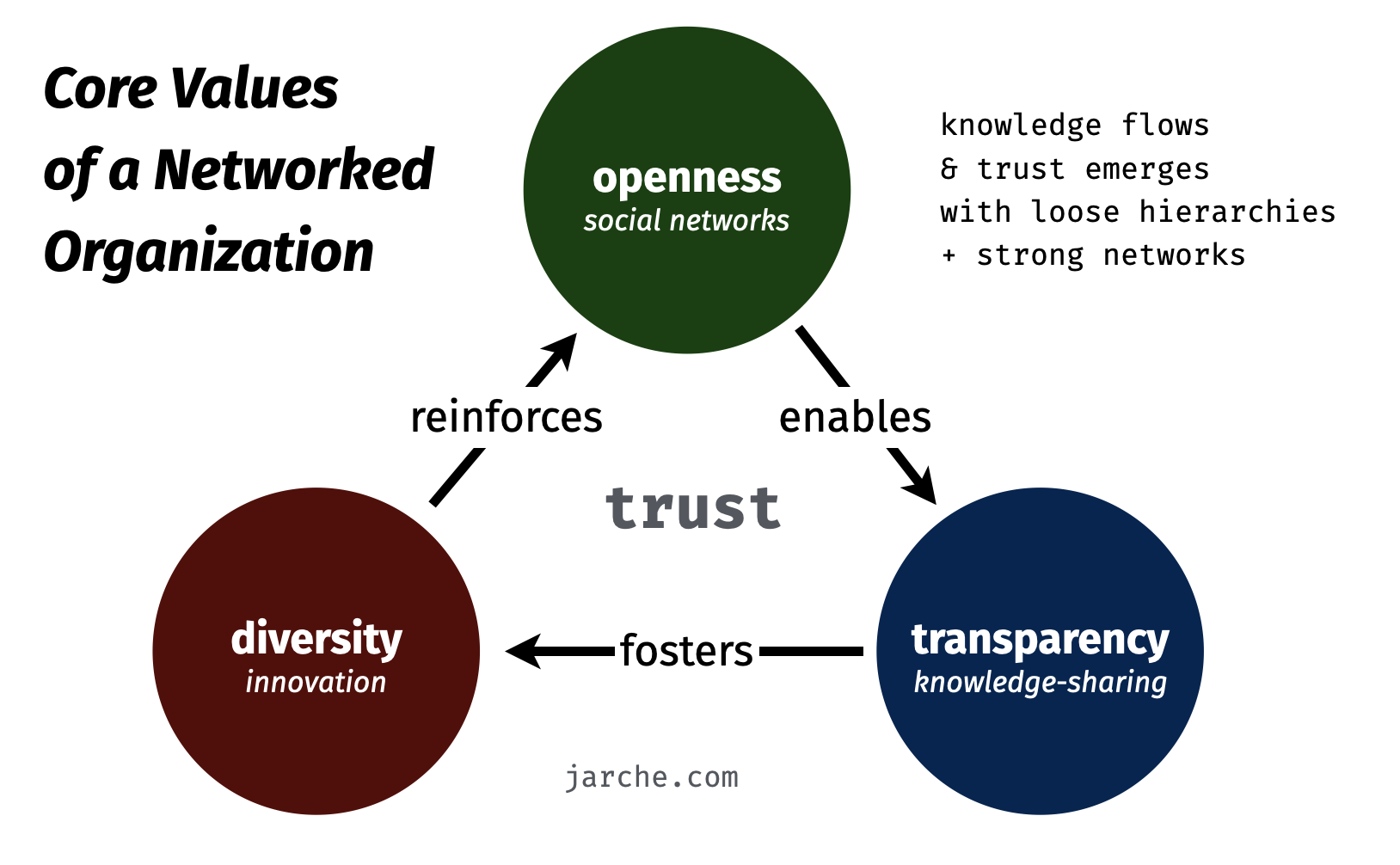
Social learning powers distributed work — Supporting workplace learning in distributed workplaces is much more than pushing content or creating courses. Social learning is about people in trusted relationships sharing and building collective knowledge.
The social sweet spot — As distributed work becomes the norm, other shifts in how we work and learn will be required. Competition is now global and a lot of work is viewed as a commodity, pushing down wages for any type of repetitive work. Knowledge workers will have to find professional communities to stay current and these may not be in their organization. They will need to connect through digital networks.