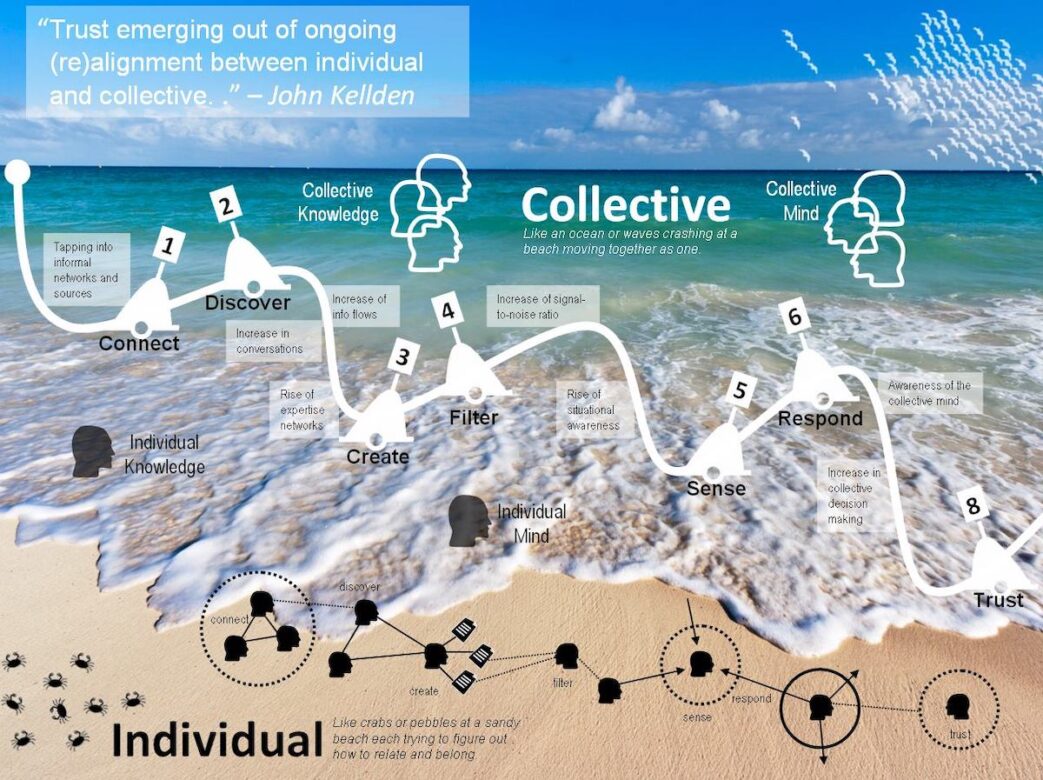
We are just finishing the final personal knowledge mastery workshop, a series that has run for 12 years. I’ve explained the decision to shut down at the end of the line where I noted that I need to figure out how we can individually and collectively make sense as we wallow in the AI slop.
I started developing the PKM framework in 2004 and shared my progress on this blog. Later, organizations hired me to implement PKM in their workplaces, such as Domino’s and Citibank. The online workshop was launched in 2014 due to an increasing interest and demand in sensemaking in an online world. I define PKM as a set of processes, individually constructed, to help each of us make sense of our world and work more effectively. PKM keeps us afloat in a sea of information — guided by professional communities and buoyed by social networks.
I have a few ideas on what may come next. One is to focus on social activism. I have been involved in a fight to stop a methane/diesel fuelled electric generating station in our town. Since July 2025 I have been active with the Protect the Chignecto Isthmus Coalition. We have had to learn a lot about power generation, electric grids, air pollution, water contamination, wildlife patterns, and much more. Before last July, I did not know what a synchronous condenser is. What I have learned is that there is a lot to learn about complex challenges, especially when facing large corporations with experts and lawyers and legal and regulating systems that require even more knowledge just to know what questions to ask and to whom. Perhaps the PKM framework can be used as a base model to develop sensemaking skills at scale.
Other frameworks and models that could be added to PKM might include value network analysis, understanding media, or network leadership. Getting a disparate group of people to understand a complex challenge, whether it be a gas plant or the housing crisis, is increasingly a challenge many of us will know about and may even be involved with.
My internal compass points toward the concept of an aggressively intelligent citizenry, a term coined by Peter Levesque — “I suggest that the leaders will be found among the aggressively intelligent citizenry, liberated from many tasks and obligations by technology freely shared; using data, information and knowledge acquired from open source databases, produced from the multiples of billions of dollars of public money invested through research councils, universities, social agencies, and public institutions.”
Yes, Peter’s words sound a bit naive 22 years later, as the platform capitalists control much of the means of production. But perhaps in the near future AI can stand for aggressive intelligence.