Tribes and networks coexist

So the social networking utopia is not coming, writes Mashable’s Chris Taylor on CNN. He cites one Dunbar number (now all the rage) and concludes:

Turns out we’re hardwired to get along best in tight groups of no more than 150, and have been since we were living on the African savannah. Armies take advantage of this hardwiring, as do the smartest corporations, not to mention wedding planners.

Dunbar’s research looked at relationships among primates and didn’t take into account loose ties or electronically mediated & enhanced communications. It is not a fair comparison. But Taylor’s words on Tribalism triggered an old connection for me:

A study released this month shows that digital tribalism is alive and well in the social network era. The tribes I’m talking about aren’t nations, corporations or sports teams, though clearly these brands all matter as much as they ever did.

I’m talking literally about tribes — as in the kind of village-sized small groups most of us lived among for nearly all of human history, right up until the 20th century. Small groups that we now seem to be organizing ourselves into again — virtually.

A few years ago I came across a framework of our four primary historical modes of organizing – Tribal; Institutional; Markets; Networks. The TIMN framework shows how we have evolved as a society. It has not been a clean progression from one mode to the next but rather the new form built-upon and changed the previous mode.

A key point of this framework is that Tribes exist within Institutions, Markets AND Networks. We never lose our affinity for community groups or family, but each mode brings new factors that influence our previous modes. So yes, tribalism is alive and well in online social networks. It’s just not the same tribalism of several hundred years ago.

We are in a transition from a market to network-dominated society, and according to David Ronfeldt, each transition has its hazards. While tribal societies may result in nepotism, networked societies can lead to deception, as Mashable itself has reported. It’s interesting that tribes of hackers are a potential counter to network deception.

Ronfeldt states that the initial tribal form informs the other modes and can have a profound influence as they evolve.

Balanced combination is apparently imperative: Each form (and its realm) builds on its predecessor(s). In the progression from T through T+I+M+N, the rise of a new form depends on the successes (and failures) achieved through the earlier forms. For a society to progress optimally through the addition of new forms, no single form should be allowed to dominate any other, and none should be suppressed or eliminated. A society’s potential to function well at a given stage, and to evolve to a higher level of complexity, depends on its ability to integrate these inherently contradictory forms into a well-functioning whole. A society can constrain its prospects for evolutionary growth by elevating a single form to primacy — as appears to be a tendency at times in market-mad America.

So tribes are not dead, and neither are institutions and markets, in a networked society. We need to understand all four modes as we make the current transition. Saying that tribes render social networks useless after 150 connections is a bit trite. The real work is in figuring out how best to create organizations, and societies, that balance combinations of all four modes, emphasize their bright sides and remain in perpetual Beta [what Ronfeldt calls incomplete adaptation].

The TIMN framework is very useful for having deeper conversations and increasing our understanding of what we’re going through as a society. It should be required reading for organizational leaders and politicians as well.

Resetting learning and work

A large portion of the workforce face significant barriers to being autonomous learners on the job. From early on we are told to look to authority and direction in learning and work. The idea that there is a right answer, or an expert with the right answer, begins in our schools. John Taylor Gatto describes this in the seven-lesson schoolteacher.

The fifth lesson I teach is intellectual dependency. Good people wait for a teacher to tell them what to do. It is the most important lesson, that we must wait for other people, better trained than ourselves, to make the meanings of our lives. The expert makes all the important choices; only I, the teacher, can determine what you must study, or rather, only the people who pay me can make those decisions which I then enforce. If I’m told that evolution is a fact instead of a theory, I transmit that as ordered, punishing deviants who resist what I have been told to tell them to think. This power to control what children will think lets me separate successful students from failures very easily.

Good employees wait for their supervisor to tell them what to do. In much of the industrial/service/information workplace you’re not paid to think, but to do the bidding of someone else. I know this is changing in many places, but a job is still a JOB.

Today, more of our learning is on the job so that formal training is an increasingly smaller percentage of what we need to get things done. Our informal learning needs will continue to grow, as Robert Kelley showed over a 20-year CMU study of knowledge workers. He asked:

“What percentage of the knowledge you need to do your job is stored in your own mind?”

1986 ~ 75%.
1997 ~ 20%
2006 ~ 10%

Workers need to take control of their learning, just at a time when the great majority (especially baby boomers) have been educated by the system that Gatto describes above and have endured countless hours of training measured by hours in a classroom. The crows have been culled from many flocks of turkeys.

Here’s a quote from Peter Drucker’s 2005 article Managing Oneself, in HBR (Slideshare Synopsis of Managing Oneself):

The challenges of managing oneself may seem obvious, if not elementary. And the answers may seem self-evident to the point of appearing naïve. But managing oneself requires new and unprecedented things from the individual, and especially from the knowledge worker. In effect, managing oneself demands that each knowledge worker think and behave like a chief executive officer. Further, the shift from manual workers who do as they are told to knowledge workers who have to manage themselves profoundly challenges social structure. Every existing society, even the most individualistic one, takes two things for granted, if only subconsciously: that organizations outlive workers, and that most people stay put.

Tom Peters called this change in mindset, Brand You and predicted over a decade ago that “90+ percent of White Collar Jobs will be totally reinvented/reconceived in the next decade”. Has yours? I don’t think we’re there yet.

For years, I put forth practical methods, like Personal Knowledge Management (PKM) and Skills 2.0 as one part of the equation. The other part is changing organizational structures.

Dan Pink says we’re moving from the Information Age to the Conceptual Age. Like artists, we need to see and learn for ourselves. The great challenge for knowledge workers is to become knowledge managers – managers of their own knowledge. It’s accepting life in perpetual Beta.

However, we don’t have to do this alone. We can become independent while embracing our interdependence. We just need to get over our dependence on others who “provide a job” or “give us an education”. It’s not theirs to give. It’s ours to co-create.

I’ve learned a lot working for myself these past eight years. I’ve had to figure many things out on my own. Freelancing started the day after I was laid-off. PKM was my way of dealing with the fact of no professional development budget. But I learned with the help of others, most recently my colleagues at the Internet Time Alliance.  

Taking control of our learning and our work isn’t really a revolution. It’s more like a reset to the proper default position for the conceptual age.

You don’t reach Serendip by plotting a course for it

Friday’s Finds are a compilation of what I have learned on Twitter the previous week. This started as an alternative to the popular #FollowFriday on Twitter where people say who they recommend to follow. I find that most #FF recommendations lack context so I usually ignore them and I don’t post them as I feel they just add noise to the stream. Instead, I curate Friday’s Finds.

For 107 consecutive weeks I published Friday’s Finds but I missed last week because I was having too much fun deep in many conversations. Offline took precedence over online. So here’s what I learned via Twitter these past two weeks.

QUOTES

@MarionChapsal – “You don’t reach Serendip by plotting a course for it. You have to set out in good faith for elsewhere & lose your bearings serendipitously”

“The ROI on innovation is survival.” @aronsolomon @darrellwhitelaw

Origin of “social network”: Sociologist went to Norwegian fishing village in 1954 & studied how the fishers interact – via @jerrymichalski @ePatientDave

@JaneBozarth – “Note: The session is “Social Media for Trainers”, not “Tell Me How to Manage the Dysfunctional Team I Created, While I Blame Technology”

“We are all in the gutter, but some of us are looking at the stars” ~ Oscar Wilde – via @Flipbooks

Shareable: “Making, in short, is not about making. Making is about sharing ~ @doctorow”

When I invent or discover something, I immediately put it on the net. And when I find myself in a corner of the world that is not to my liking, I Google up some hack that someone else has put on the net and apply it or adapt it to my needs.

Making, in short, is not about making. Making is about sharing. The reason we can make so much today is because the basic knowledge, skills, and tools to make anything and do anything are already on the ground, forming a loam in which our inspiration can germinate.

You Want Best Practices? by @MarkFederman

Blindly adopting so-called best practices in a bid to become as successful as some arbitrary industry leader is a management cargo cult. Transformative education is founded on experiential learning, not plagiarism.

Video: The Turkey & the Crow – The Tension Between Expertise & Creativity [need balance]

Education would really be much better if it recognized  how fundamentally different turkey- and crow-biased thinkers approach learning. It wouldn’t hurt either for more teachers, parents, professionals, and really everybody else came to appreciate the remarkable talents of the crow.

Adapting to Life in Perpetual Beta

On my services page, I [used to] have summarized my perspectives on 21st century work. It’s called: Adapting to Life in Perpetual Beta.

  1. There is no such thing as a social media strategy.
  2. There are only business strategies that understand networks.
  3. Collaborative and distributed work is becoming the norm.
  4. Social learning is how work gets done in networks.
  5. Sharing, enabling conversations and transparency are some of the values of networked business.
  6. This is done through knowledge-sharing, self-directed learning and user-generated content.
  7. Learning is part of work, not separate from it.

This too, is in perpetual Beta …

Journey to the edge

This past week I was involved in many stimulating conversations with some very interesting people. The theme of new organizational structures came up and it was observed that one challenge we have is in addressing our inherent tribal nature. There is a strong need to belong to something, which can detract from critical thinking and questioning the inherent assumptions of our structures. Another growing challenge is how do skilled, motivated and intelligent managers deal with dysfunctional organizations? I get asked this question quite often as many very good people just seem to be stuck in the job/mortgage/pension trap. How can we get off this treadmill?

One very important observation on organizational change is that anthropology does not scale like technology does. Trying to solve someone’s problem from the outside only results in the problem being changed from the inside. We have to solve our own problems and that takes time. For example, a polycentric approach encourages design at the local level, with certain design principles (like a pattern language) instead of answers. So how can we take action on observations like those in my last post – 21st century workplace – and start the journey to the complex and chaotic edge? My aim, with my partners at the ITA and TULSER, is to find and map some of these pathways.


The 21st century workplace: moving to the edge

The evidence of simple and (merely) complicated work getting automated and outsourced is widespread. Meanwhile, the business imperative is to be innovative, creative and agile.  The current Canada Post strike is evidence of this shift, with workers reacting against a major automation initiative. The postal automation process currently has significant flaws, but who thinks these cannot be solved in some future iteration? What is the future of complicated work, such as mail sorting and delivery? Rather bleak, I would think. However, solving a customer’s unique problem of getting pieces of art to several remote locations can be complex. There will always be complex problems that cannot be solved through automation.

I’ve used this concentric model to describe the networked workplace in recent posts:

emergent workplace

Basically, valued work in the 21st century workplace is moving to the outer rings to deal with growing complexity and chaos. The high-value work is in facing complexity, not in addressing problems that have already been solved and for which a formulaic or standardized response has been developed.

Dave Jonassen has said that as adults, most people are paid to do only one thing – solve problems. When dealing with work problems we can categorize the response as either known or new. Known problems require access to the right information to solve them. This information can be mapped, and frameworks such as knowledge management (KM) help us to map it. We can also create tools, especially electronic performance support systems (EPSS) to do work and not have to learn all the background knowledge in order to accomplish the task. This is how simple and complicated knowledge gets automated.

new known

Complex, new problems need tacit knowledge to solve them. Exception-handling is becoming more important in the networked workplace. The system handles the routine stuff and people, usually working together, deal with the exceptions. As these exceptions get addressed, some or all of the solution can get automated, and so the process evolves.

The 21st century workplace, with its growing complexity due to our inter-connectivity, requires that we focus on new problems and exception-handing. This increases the need for collaboration (working together on a problem) and cooperation (sharing without any specific objective).

One challenge for organizations is getting people to realize that what they know has little value. How to solve problems together is becoming the real business imperative. Sharing and using knowledge is where business value lies. With computer systems that can handle more and more of our known knowledge, the 21st century worker has to move to the complex and chaotic edge to get the real (valued & paid) work done. In 50 years, this may not be an issue, but right now there are many people who need help with this challenge. This is the important work of leaders everywhere: enabling the current workforce to enter the 21st century.

Get outside the disciplinary box

A most interesting post by Nick Milton at Knoco got me thinking again about complexity. I like the 2 X 2 diagram showing how increasing complexity makes us dependent on creative individuals and increasing collectivity makes us dependent on more processes. The former case is reflected in my own observations that complex work requires creativity and is where the value of the post-industrial organization lies. The latter case is where we are – with industrial processes and procedures for everything, but none able to deal with increasing complexity and hence the need to change our focus to things like barely repeatable processes.

According to the diagram, in a highly complex and collective environment, like most organizations in our interconnected world, we should be focused on knowledge management. If this means some form of KM 2.0, then I might agree. If it means enterprise KM and perhaps even the semantic web, with all its undelivered promises, then I doubt that it will be adequate to simultaneously support creative individuals and develop flexible procedures and processes.

Venkatesh Rao has a good critique of KM, from a generational perspective, and how it is so different in approach from social media. I think we need some form of “social KM”; a way to facilitate social learning, improve knowledge-sharing and overall enable collaboration and innovation. I don’t think that exists yet, though many are experimenting with frameworks like Social Business or Enterprise 2.0.

Much has been learned in the KM field and there is much to learn from emergent social media practices as well. However, real innovative approaches will be found at the edges. Frans Johansson showed with several cases in The Medici Effect how exponential innovations can occur when examining one field through the lens of another field. That is the opportunity: change lenses.

Nick concludes:

We need to be innovative, we need to be agile, we need to learn very fast, and we need to pool and build on what knowledge we have. That’s why Knowledge management is a crucial tool for survival in a Level 3, Collective world; whether you are in the Nuclear industry, the sales and marketing business, government, or any other sector. Knowledge is in short supply, so we need to make the most of what little knowledge we have, and be prepared to think and learn and innovate on our feet, collectively.

I agree, though knowledge management is too narrow a perspective. We need to think bigger and get outside our disciplinary boxes.

Update: This video on the tension between expertise and creativity gives more food for thought on the balance we need to foster in the complex, collective workplace.

Another quotable Friday

Here are some of the things I learned via Twitter this past week.

There were lots of quotable folks on Twitter this week, so that’s what I’m highlighting:

@charlesjennings “My credo: real learning is all about experience, practice, conversations and reflections – no more, no less.”

@hwakelam “Complex systems create fast space (simulation) improving engagement with physical space and helping adults play ~ John Smart”

@oscarberg “Collaboration is in a more sorry state in most (even leading) large organisations than they dare to confess.” – “I have yet to experience an organisation where their collaboration practices are as good as they say.”

@JenniferSertl “As far as we can discern, the sole purpose of human existence is to kindle a light in the darkness of mere being ~ Carl Jung”

@SebPaquet “Money has no smell, but reputation does.”

“the Knowledge makes us the most qualified cabbys in the world, twitter makes us the most informed” via @Jackcabnory & @KARLcabbyJAMES

@techherding “Starting a new business based on Apple “cloud” model. You pay me to buy a Ferrari, but I keep it for you.”

@susancain “In modern organizational life, the most important things are the ones you can’t measure ~ Roger Martin, at World Innovation Forum”

@ImaginaryTime “Organizations need to start regarding knowledge as an emergent property of social interaction as opposed to a material object.”

PKM Updated

Here are four main processes that can be used in developing critical thinking skills using web tools (click image to enlarge).

Using a Seek-Sense-Share framework (à la personal knowledge management), pick one or more web platforms on which to practise critical thinking.

PKM Critical Thinking Process Web Tools & Strategies
1) SEEK Observe & Study Use an aggregator (feed reader) to keep track of online conversations Follow interesting people on Twitter  

Use Social Bookmarks (set them free)

Find a Twitter App to suit your needs

Create online (reusable) mind maps,  graphics and text files of your thoughts

With more information in online databases, use Search, instead of file folders.

Set up automated searches

Review your bookmarks, Twitter favourites, etc

2) SENSE Challenge & Evaluate  

Form Tentative Opinions

Tweet your thoughts, not just those of others  

Write a reasoned response to an article/post that inspires/provokes you

Write an original Blog post

Present your images/mindmaps with explanations

Write book/video reviews

Aggregate your learning from various sources and post a regular “what I learned” article – text, podcast, video, image

3) SHARE Participate Connect via Twitter 

Share social bookmarks through groups & networks

Join Social Networks

Join in Tweet Chats

Comment on or about other blogs

Continue and extend conversations from news sources, other tweets or blog posts

In my opinion, the core of PKM is 2) sensing, though 1) active observation is necessary to feed sense-making processes and 3) sharing with others creates better feedback loops. The diversity of both what one seeks and who one shares with have a significant impact on the quality of sense-making processes.

Update:

At the suggestion of a reader of Wally Bock’s Three Star Leadership blog, here are some personal knowledge management (PKM) references:

Networked Learning: Working Smarter – longer article as an overview of PKM.

All posts on this site tagged PKM.

Latest list of PKM – Networked Learning Resources (2011)


Riding the roller coaster

roller-coaster

It’s been a roller coaster of a ride for the past eight years but I’m still here, freelancing, blogging and trying to figure out life in perpetual Beta. So on my eighth anniversary as a free agent, I would like to thank all the wonderful people in my communities (virtual and physical) and networks (professional and personal) for their help, support, understanding, insight and humour. I’d also like to thank all the people who have taken time to comment on my writing and extend my own thinking.

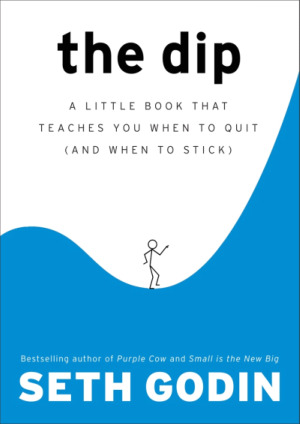
Last year at this time, I wrote about what I had learned as a free agent. Those lessons still stand. In retrospect, I think that the seven year mark may have been The Dip that Seth Godin refers to in his book, and I’m glad I decided to stick it through.

I’ve been travelling a lot more this year, with three speaking engagements already for The Conference Board of Canada, in addition to my teaching at University of Toronto’s iSchool Institute. I have an upcoming engagement at MODSIM [now cancelled] in Ottawa plus several scheduled speaking events in the Fall, such as CSTD and SIBOS. All of these mean meeting new people, connecting with old friends and having an opportunity to learn more.

I’m also very grateful for my colleagues at the Internet Time Alliance. With Charles, Clark, Jane and Jay along for the ride, the roller coaster is a lot more fun.