The new knowledge worker

What are knowledge workers? Are they a new breed or just a variation of the 20th century professional class? Neal Gorenflo, co-founder and publisher of Shareable Magazine, has identified (a very preliminary idea) a certain type of knowledge worker:

  • Knowledge workers understand information as currency. Sharing is a core strategy for success even in a corporate context. This can bring knowledge workers to the commons. 
  • Their worldview is informed by systems thinking or is polyglot. It’s not informed by a single political ideology.
  • They understand that influence depends on the ability to persuade, and that choice of language is important. They will not use political language that has been marginalized. They’re all in this sense salespeople.
  • Knowledge workers can become moderate radicals, meaning they believe that fundamental change is needed but are politically a mixed bag, they borrow ideas from left and right, from religion, from science. And they have friends and relatives on both side of the political spectrum.
  • They do not have stable identities or their identities are not wrapped up in a single belief system. They are always wondering who they are. This is a source of angst.  But what they lack in identity, they make up for in opportunity. They have options.

My first reaction to this list was how obvious it is that these knowledge workers practice critical thinking; questioning all assumptions, including their own. These knowledge workers are united by networked and social learning and connected more so to the external environment than whatever internal team they happen to be working with. They have the long view, often unencumbered by dogma, but also short on quick, simple answers. They see the humour in H.L. Mencken’s comment that, “For every complex problem there is an answer that is clear, simple, and wrong.”

If this is the new knowledge worker, what could that mean for the 21st century workplace?

  • We are already seeing the knowledge worker (creative, passionate, innovative) marketplace becoming more competitive.
  • Organizations may have to become more flexible and caring to attract good talent.
  • Organizations & corporations may have to become more ethical and less politicized.
In the long run, this should be a good thing; but what about the rest of the workforce? Stories from the economic edge indicate frustration and desperation with a broken system. How do we get to a state of enlightened organizations in a transparent environment providing meaningful ways for people to contribute to society? The new knowledge workers may have some of the answers, if they decide to flex their minds and their networks. As a knowledge worker, with the luck and skill to be in this situation, there are some big responsibilities to shoulder very soon. Is it time to lead, follow, or get out of the way?

Thoughts on slackers, conversations, data and networks

Here are some of the observations and insights shared via Twitter this past week.

“The truth will set you free. But first, it will piss you off.” ~ Gloria Steinem via @sebpaquet

Slack is a good thing – by @jackvinson

It can’t hurt to repeat this over and over again. Effective operations requires open spaces to handle variation and uncertainty. Even fairly “uniform” operations, such as assembly lines and factories need white space. Projects and knowledge work need even more.

It is a complete myth to believe that keeping everyone busy will result in success.

Netflix: maybe lessons here for your business? 

  • Netflix hire and promote people who demonstrate: Judgement, Communication, Impact, Curiosity, Innovation, Courage, Passion, Honesty & Selflessness.
  • At Netflix “adequate performance is rewarded with a generous severance package“.  They see themselves as a professional sports team not a kids games team so Netflix leaders hire, develop and cut smartly so they have stars in every position.

Data Is A Social Object by Ton Zijlstra

In my presentations over the past 8 months I’ve positioned data as an object of sociality: it becomes the trigger for interaction, a trigger for the forming of connections between people. Much like photos are the social object of a site like Flickr.com, and videos are the social object of YouTube, or your daily activities are for Twitter.

Factories: the original social business – by @drmcewan

Linking back to Esko’s contention that leadership “should be about providing a platform for discussing the meaning of work and the collective identity”, I think that one of the big learnings in making the transition from traditional manufacturing to the ” learning factory” is the emergence of relationships as a key lever in making the transition to new ways of working.

I think we learned that the meaning of work was and continues to be in the relationships we have with each other, the relationship we have with the organisation we work for, and in the service we give to others. Creating the initial conditions for relationships to develop that enhance out desire for recognition, self-determination, social status and learning will continue to be associated with high- performance and engaging work.

2 Questions Everyone Asks When They Meet You – all social judgments boiled down to 2 dimensions? by @drves

Professor Susan Fiske of Princeton University has shown that all social judgements can be boiled down to these two dimensions:

  1. How warm is this person? The idea of warmth includes things like trustworthiness, friendliness, helpfulness, sociability and so on. Initial warmth judgements are made within a few seconds of meeting you.
  2. How competent is this person? Competency judgements take longer to form and include things like intelligence, creativity, perceived ability and so on.
June Holley and network weaving via @PAnklam & @nancyrubin
Connector
  • Reach out to be more inclusive
  • Helping people find resources
  • Connecting people with common interests
Network facilitator
  • Coordinate working groups
  • Facilitate meetings
  • Help set up the structure of the network
Project Leader/Coordinator
  • Help people find others interested in the same things
  • Help people work together on projects
  • Help people keep organized
Network Guardian
  • Help set up good communication systems and resources
  • Set up training & support for network weavers
  • Make sure time is set aside for reflection

Organizing for diversity and complexity

I’ve been looking at ways to explain why social learning is so important for business today. It comes down to the fact that what we know and do inside our organizations is insufficient to address external complexity or to be innovative. In Leadership 2030, the Hay Group identifies six fairly obvious, but worth repeating, megatrends, all of which will require more innovative approaches to work:

  • The balance of power is shifting to the East
  • Climate change and scarcity of resources is a mounting problem
  • The war for talent rages on
  • Accommodating growing individualization, requiring more social workplaces
  • Embracing people who are digitally adept
  • Harnessing Nano-Info-Bio-Cogno technologies

Connecting the diversity of markets and society to the organization, instead of creating firewalls, is a major challenge for leadership today. How do you maintain the integrity of the organization while embracing the chaos beyond? Part of the answer is in supporting communities of practice as a bridge between external networks and those doing the work.

Project Teams do complex work (if it’s not complex, it will be outsourced & automated) which requires strong interpersonal ties. Nick Milton has a similar explanatory framework [I’ve used some of his terms in my revised graphic above], and notes the increase in virtual teams as well:

The fourth level [project teams] is where the business needs actively to work with people from elsewhere as part of a short lived co-located team, or a longer lived virtual team.  It needs the skills and input and judgment and effort from the others, and the outcome is co-created with the others.

At the far end are external networks, where we get ideas and opinions, in a more chaotic, unstructured and random way. This is where serendipity often beckons.

In the middle are communities of practice, which comprise a mix of strong and weak social ties and are the ideal liquid space for mixing learning and work while sharing advice and knowledge. Social networks are the enabling technologies that can connect external networks, communities of practice and project teams. Social learning is what flows on these networks.

Ross Dawson has a very good description of the power of social networks from the perspective of Giam Swiegers, CEO of Deloitte Australia. However, social media change the hierarchical power dynamic and not all leaders may be ready for it:

He said as a senior executive if you can’t handle having a peer conversation with young, junior staff, you shouldn’t get involved. He gave an example of a young staff member who disagreed on a key issue with the CEO who said so publicly. Swiegers far preferred to have the debate with him in public rather than the views being aired in the pub without him knowing about it.

An unpopular policy decision was made internally that Swiegers was not told about. The response on Yammer was strong, quickly leading to changes in the policy, guided by the most sensible alternatives proposed on the social network.

The power of social networks, like electricity, will inevitably change almost every business model. Leaders need to understand the importance of organizational architecture. Working smarter starts by organizing to embrace diversity and manage complexity.

Cooperation and networks at Innotribe

Stowe Boyd & I are opening the presentation on corporate culture this morning, here in Toronto at Sibos. We will be looking at how organizational frameworks and models have changed. Stowe will talk about the architecture of cooperation:

The new architecture of work is now emerging, after decades of transition. White collar work became knowledge work which has now become creative work. The transition from process to networks is not just a recasting, not just a different style of communication. The work is styled as information sharing through social relationships, and where ‘following’ takes the place of ‘invitation’. People coordinate efforts, but work on a wide variety of activities, which are not necessarily co-aligned with others’ work, and which are not necessarily even known in a general way. A new degree of privacy and autonomy animates cooperative work, in comparison to collaborative work. Individuals cooperating hand off information or take on tasks in a fashion that is like businesses cooperating: they see the benefit in cooperating, and don’t have to share a common core set of strategic goals to do so: they don’t need the alignment of goals that defines old style business employment.

I will discuss the TIMN model, which I learned about via John Robb. I will overlay it with a look at dominant communications media and talk about some of the organizational changes we are seeing and may see in the near future.

We may see more of the following.

Wirearchy: a dynamic multi-way flow of power and authority based on information, knowledge, trust and credibility, enabled by interconnected people and technology.

Heterarchies are networks of elements in which each element shares the same “horizontal” position of power and authority, each playing a theoretically equal role [wikipedia].

Chaordic refers to a system of governance that blends characteristics of chaos and order. The term was coined by Dee Hock the founder and former CEO of the VISA credit card association [wikipedia].

And I’ll ask these and some some other questions:

Do networks obsolesce hierarchies? Can they co-exist?

What happens when your customers are more connected than your organization?

How does the transparency that networks enable change your organizational model?

Two simple backchannel options

I’ve been looking at some simple ways to add a backchannel for a conference, with a few major constraints. It has to be free or very low cost. It should not be open to the general public (thus eliminating Twitter). It should be as simple as possible.

The simplest tool I found was Today’s Meet, which lets you set up a backchannel in seconds, requires no account set-up, allows pseudonyms, is web-only, provides a full transcript and will delete all contents after a set time. Pretty good for a free service. One main issue could be that the site is not password protected. There is a unique URL generated and if kept confidential, is acceptable for low risk conversations. The site can be set up minutes before the conference and transcripts downloaded minutes after the conference is over and then deleted. Overall, a rather stealth technology.

A more complicated, but also more robust platform is WordPress. It requires each user to create a WordPress account. Using the P2 theme, available with a free wordpress.com account, you can set up a private community activity stream that looks much like Yammer. Benefits include customization, the addition of explanatory pages and several widgets, including Twitter feeds. With the worldwide WordPress community, you also know the technology will be around and supported for a long time.

So these are two free options to use at conferences where participants do not want to be on the open web and have some concerns about security or publicity. These are not options where security is a major concern. In that case, stick to your Intranet or VPN.

The Freelance Revolution

The notion that work is changing and that free agent knowledge workers will dominate the new economy was something I discussed in my Master’s thesis, published in 1998.  I’ve been talking about free agents as the future of work on this blog almost since I started it. I wrote that free agents are the future of work in 2004 when I noticed that it was getting much easier to be a free agent. In my first year as a freelancer, I learned business lesson #1 : there IS NO BUSINESS until you have a customer.

After three years, I created a list of what being a free agent meant to me:

10. Doing my own tech support

9. Only working seven days a week

8. Paying cash & avoiding monthly payments

7. Time for exercise and reading

6. Lots of short breaks, but no long holidays

5. Getting asked to volunteer more

4. Seeing more of my banker

3. Seeing more of my family

2. Looking forward to Mondays

1. Creating my own opportunities

I likened free agentry to a natural enterprise and noted that salaried work is a mug’s game:

Corporations have had continuous profits while workers have seen none of it. Trickle down economics doesn’t work. One of the few options for individual workers is to establish a new work contract. However, unions are losing influence and collective bargaining hasn’t done much for workers’ wages.

It’s getting easier for individuals to connect with social applications like Facebook and we are also seeing tools like Linked-In for business. The tools for individual workers to connect and collaborate are now available, though we don’t have the culture or mindset to fully embrace them yet.

My brush with full-time employment inspired me to write: you do not own me:

I have often referred to salaried employment as indentured servitude, and practices such as non-compete clauses are examples of this culture. Perhaps with more worker mobility, a growing body of free-agents and less dependence on corporations for work, we may see this culture changing. Let’s hope that the lawyers hear about this soon.

My recommendation two years ago was – freelancers unite:

If contract work seems like the only option, then start networking with co-workers and competitors. Band together as a guild or association and help each other out. Think of it as a freelancers union and look into group health care, joint marketing and shared administration. You can’t do this working 40 hours a week for The Man. The deck is stacked with laws supporting either employers and employees but the future of knowledge work is free-agency. The powers that be, corporations and unions, won’t change to help out freelancers, we have to help ourselves.

Being a free agent has been like riding the roller coaster, but after this decade it seems that it is becoming the norm. One of my inspirations when I went on my own was Dan Pink’s Free Agent Nation. Via @DanielPink on Twitter, I just came across this article in The Atlantic – The Freelance Surge is the Industrial Revolution of Our Time:

This transition is nothing less than a revolution. We haven’t seen a shift in the workforce this significant in almost 100 years when we transitioned from an agricultural to an industrial economy. Now, employees are leaving the traditional workplace and opting to piece together a professional life on their own. As of 2005, one-third of our workforce participated in this “freelance economy.” Data show that number has only increased over the past six years. Entrepreneurial activity in 2009 was at its highest level in 14 years, online freelance job postings skyrocketed in 2010, and companies are increasingly outsourcing work. While the economy has unwillingly pushed some people into independent work, many have chosen it because of greater flexibility that lets them skip the dreary office environment and focus on more personally fulfilling projects.

Welcome to the revolution, folks. Let’s keep working together.

Communities across the chasm

How do you get ideas to spread, especially in organizational communities of practice (often behind the firewall) to encourage innovation?

In Connecting Ideas with Communities, I figured that if you want to foster large-scale change in an organization or even a network, then you would:

  1. Connect the right Mavens with the potential Innovators,
  2. target the Early Adopters via the Connectors, and then
  3. find the Salespeople who will influence the Early Majority.

The oft-quoted 90-9-1 rule, would infer that you only need 1% Creators (Mavens):

User participation in an online community more or less follows the following 90-9-1 ratios:

  • 90% of users are Lurkers (i.e., read or observe, but don’t contribute).
  • 9% of users are Commenters. They edit or rate content but don’t create content of their own.
  • 1% of users create content and are Creators.

This article goes on to disprove 90-9-1, as do others, indicating that as more people get used to sharing online, the figure rises to 10% or more Creators in active communities. This is further reinforced by research that shows that a 10% level of commitment is necessary to spread ideas:

An important aspect of the finding is that the percent of committed opinion holders required to shift majority opinion does not change significantly regardless of the type of network in which the opinion holders are working. In other words, the percentage of committed opinion holders required to influence a society remains at approximately 10 percent, regardless of how or where that opinion starts and spreads in the society.

One percent just doesn’t give you the necessary critical mass. Going back to my original premise from two years ago, I would think that a good rule of thumb would be to nurture communities of practice from a kernel of Mavens & Innovators plus Early Adopters & Connectors, aiming to engage enough to compose 10% of what will be the actual community. Inside organizations, this is relatively easy to calculate. Let’s say you have 100 nuclear scientists in R&D. These professionals already feel an affinity to their field but they are spread across the world. Some of them get together once a year while others may seldom travel. Knowledge is often kept in silos or sits on a hard drive or in some lost shared-drive folder. How would a newly-minted community manager help this community of 100 share its knowledge?

Ignoring technology selection (which is usually the easiest aspect), I would start to identify the Mavens; those who are respected by their peers for their knowledge and experience. Then I would find the Innovators. Now comes the hard part, getting these two groups to dance. This requires a lot of listening and preparation in order to see and seize opportunities for collaboration. Once something innovative is identified that interests the Mavens, such as sharing conference notes and views on the Intranet with the greater community, then it’s time to get the Connectors to help spread the word, but not to everyone, just the Early Adopters who don’t take all that much convincing. Once this group becomes about 10% of the desired size it’s ready for an open launch. Given the gentle hand of the community manager, a bit of publicity and easy ways for Lurkers to drop in, you may have the roots of a community of practice.

A major difference with this approach is that you don’t try to convince the Majority from the onset. You cross the chasm once you have a bridge, not before.


The community dance hall

In Diversity, Complexity & Chaos I highlighted several articles by others that discussed these themes and I finished with this graphic:

Karen Jeannette (@kjeannette) noted that her challenge is to “foster movement between the bubbles” and I responded that my own experience and with my clients has been that negotiating these boundaries is an art form and is highly contextual and quite fluid. To which Karen responded, “which is why I’m glad I had dance lessons when I was young …. always dancing, negotiating the next step”. This is an important metaphor. Supporting communities of practice is a lot like dancing, there’s constant give and take.

Another useful metaphor is to think of social media as languages. Learning to use one is like learning a new language, and as anyone who works with adults learning new languages has observed, most grown-ups do not want to look stupid, so they are inhibited in embracing the new language and making mistakes as they go along. Younger children don’t have this aversion.

So here we are, speaking new languages, where some people are fluent and others less so and then put on the dance floor learning new routines, while in fleeting but pervasive contact with partners of varying skills, abilities and mannerisms.

Instead of trying to find the perfect recipe for supporting communities of practice in the organization, think more like a social convener of a community dance hall. Many people have come, some will dance well, some poorly with gusto, and others will watch. Your aim is not to make it perfect for everyone but to make sure that people come to the next dance. That means changing the tempo of the music or perhaps introducing new dance partners or maybe taking a break. It takes keen observation, pattern recognition and a suite of subtle tools (a gentle hand) to help guide the flow.

The community hall is where those who work together can be more social while meeting some new folks from out of town. It’s a constantly negotiated space, dependent on who shows up, who plays, and who dances.  It depends on getting introduced to interesting people; some to dance with and others to talk to.

Social, not mediated

Earlier this year I wrote that social media for marketing is just the tip of the iceberg. The real power of social media is for getting things done. They facilitate learning and working; which are now joined at hip in the creative, complex workplace that’s 24/7 in multiple time zones and always-on.

I think phase one of social media is almost over. It started with the early adopters who were enthused and helpful. It is finishing with the carpet-baggers; all those social media gurus and brands who want to sell you stuff and see this as an easy marketplace. Just as the snake-oil salesmen followed the travelling circuses and chautauquas in the developing American West, so did every vendor and spammer jump on the social media bandwagon. And some of the bigger kids did too.

Now some organizations are realizing how interconnected, networked people can get things done by working smarter. They are seeing the iceberg under the water line and realizing that social is bigger than media. As Umair Haque describes it, we need to move from social media to social strategy:

Yet, most “social media” strategies have one or more of three goals: to “push product,” “build buzz,” or “engage consumers.” None of these lives up to the Internet’s promise of meaning. They’re just slightly cleverer ways to sell more of the same old junk. But the great challenge of the 21st century is making stuff radically better in the first place — stuff that creates what I’ve been calling thicker value.

Organizations don’t need “social media” strategies. They need social strategies: strategies that turn antisocial behavior on its head to maximize meaning. The right end of social tools is to help organizations stop being antisocial. In fact, it’s the key to advantage in the 2010s and beyond.

My observations of Google Plus reinforce why we need to shift away from the tip of the iceberg (media) and focus on its base (social). The current business model for social network platforms is antithetical to what we really need to use them for. We are the product being sold. How can that be a sustainable social contract?

Google Plus wants to sell my data, hence the requirement to use my real name. It’s not about me; it’s about the advertisers. I think the people who are critical of Google Plus (and it could have been any other company) are signs of an initial sea change. Growing resentment of being used and subjected to constantly changing terms of service could result in a desire for common and open social platforms. Governments and NGO’s could step up and get these going but the marketplace may demand it.  If Status.net offered an ad-free & no-selling-of-data platform for $25 per year (same as Flickr Pro), would there be enough people for a viable business model? Would it be possible to give free accounts to those who cannot afford it?

I believe that as social networking becomes more important in our work and leisure activities, we will be willing to pay for it, in return for controlling our data. I hope that time is soon.

One platform to rule them all

All of the hype around Google+ seems to have put me me into a social networking depression. Until recently I really liked Twitter but I know that it will become more advertising-centric as time goes on. Where Facebook is, Twitter will be. Along comes Google+ and it seems to address many of the issues of those who use several social  platforms; a unified dashboard, coupled with the promise of Google Takeout. Of course the price for Google+ is free, so who’s really the customer? Not me; not you.

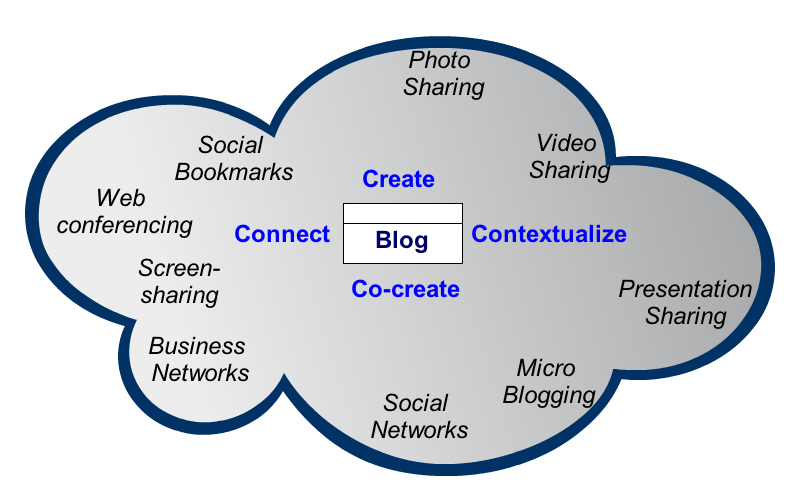
For several years, I have seen my blog as my central point on the Web, with peripheral platforms coming and going. I’d like to keep it that way and own my data. What happens if I don’t participate in Google+? Will I miss out on an increasing number of learning and business opportunities?

Stephen Downes has a good criticism of Google+ and what its dominance could mean: a data black hole:

Of course, Google+ is already a great source of connecting with more wonderful people and ideas. Dave Gray posted a detailed analysis of Google+ and how he uses his public and private social networks, with this graphic:

So I am going to lurk for a while and see what is happening. I don’t want to jump on any bandwagon but I have a responsibility to my clients and myself  to understand this stuff. I’d like to just avoid it for a few weeks and see what transpires. Not sure if I’ll be able to do that, especially when I read comments, from people I respect, that Google+ “hangouts” enable people to learn more easily than any other medium. That’s pretty powerful.

For now, I’m going to try to not get rolled-over by the Google juggernaut and keep maintaining my little piece of the open Web. In the meantime, you may be seeing less of me on Twitter as I take more time for reflection on this potential social media inflection point. I also belong to several private networks that still need my attention and I may discuss some of my concerns there. My blog will continue to be where I post my half-baked ideas and air them in public.