Narration of Work

I see three major principles for working smarter in networked organizations:

  1. Transparency
  2. Narration of Work
  3. Distribution of Power

I spoke about the distribution of power in my last post on the democratization of the workplace. The narration of one’s work is an essential practice that enables this. Hans de Zwart discusses a narrating-your-work experiment that had a 17 member team use Yammer to share daily experiences with colleagues. He talks about the barriers to narration as well as the perceived benefits of this two-month experiment.

His conclusions and recommendations:

  • Don’t formalize narrating your work and don’t make it mandatory. Many people commented that this is one aspect that they didn’t like about the experiment.
  • Focus on helping each other to turn narrating your work into a habit. I think it is important to set behavioural expectations about the amount of narrating that somebody does. I imagine a future in which it is considered out of the norm if you don’t share what you are up to. The formal documentation and stream of private emails that is the current output of most knowledge workers in virtual teams is not going to cut it going forward. We need to think about how we can move towards that culture.
  • We should have both a private group for the intimate team (in which we can be ourselves as much as possible) as well as have a set of open topic based groups that we can share our work in. So if I want to post about an interesting meeting I had with some learning technology provider with a new product I should post that in a group about “Learning Innovation”. If have worked on a further rationalization of our learning portfolio I should post this in a group about the “Learning Application Portfolio” and so on.

The recommendation of both private and public narration components aligns with the need to support both strong and weak social ties. Covering the public/private spectrum can promote social learning, increase collaboration, and nurture an environment for cross-disciplinary innovation – and bridge the gap to working smarter.

Understanding social media

I have offered to give a course on understanding social media at the Tantramar Seniors College, consisting of four two-hour weekly sessions. This will not be a traditional course where I decide what curriculum is important and then deliver it to participants. Instead, I am providing opportunities to connect information, knowledge and people. This afternoon is the sign up session and instead of providing an outline, I will solicit needs – “What do you want to do?”

Here are some potential topic areas:

Social bookmarks – here are mine on social media.

Blogging

Introduction to social networking (see also social media in plain English video)

Using social media for personal learning.

Social media in business and privacy issues.

My intention is to spend class time showing how I use social media and how my network lets me learn faster. I will connect with my online networks to find answers to any questions that arise. I would also like to engage the class in co-developing resources, guidelines and other materials that will help them after the classes are over.

I will narrate on this blog what transpires over the next month, as the main reason I volunteered to give this course was to learn.

Create, Collaborate

This cartoon, by Hugh Macleod of GapingVoid, pretty well sums up my last few years.

The Internet has allowed me to self-publish at will and get connected to a growing network of people, several of whom I have had opportunities to collaborate with. There are no more hierarchies between creation and collaboration.

We live in a most interesting time in history. Never before has it been so easy to collaborate. Thanks, Vint CerfSir Tim and everyone else who helped make the network era possible.

Collective sense-making

More of my online sense-making is in connecting to people, not accessing information sources. For instance, I read a few journals but I have dropped several, knowing that other people in my network will find the interesting articles and let me know. I used to read many of the technology blogs, like TechCrunch and Read/Write Web but have dropped them from my feed reader and instead read posts that have been referred via Twitter, Google Plus or blog posts.

The big shift for me in the past decade has been in weaving a network that brings me diversity of opinions and depth of knowledge. I am constantly following/unfollowing on Twitter in an attempt at optimal filtering, which is an impossible but worthwhile goal. I look for experts who share their knowledge or act as human-powered content aggregators, selecting quality information and discarding the crap. I look for people who have mastered Crap Detection 101.

Aron Solomon [dead link] has noted that:

2012 will be a year where the value of information finally seeps into the public consciousness. The conversation will become about not only what we know but how we know that what we know is meaningful. We will shift from an orientation of quantity to one of quality. It’s not that we won’t use the Internet, it’s not that Google will disappear – of course not.

Knowledge in a networked society is different from what many of us grew up with in the pre-Internet days. While books and journal articles are useful in codifying what we have learnt, knowledge is becoming a negotiated  agreement between connected people. It’s also better shared than kept to ourselves, where it may wither and die. Like electricity, knowledge is both particles and current, or stock and flow.

streamThe increasing importance of fluid knowledge requires a different perspective on how we think of it and use it. If change is constant, then the half-life of codified knowledge (stock) decreases. We see this with the increasingly combative debates on intellectual property (IP) expressed as copyright. Both vestiges of an economy dominated by knowledge as stock. The digital world is harshly bumping against the analog world and we are caught in-between.

I think the only way to navigate this change is collaboratively. No one has the right answer, but together we can explore new models of sense-making and knowledge-sharing. We each need to find others who are sharing their knowledge flow and in turn contribute our own. This is the foundation of personal knowledge mastery. It’s not about being a better digital librarian, it’s about becoming a participating member of a networked society.

What the network saw

Instead of comments, many people are using other media to indicate what they think about a web page or blog post, as Doc Searls discusses in Comments vs. Likes, Tweets, Shares and +1s. The online conversation keeps moving and in some cases it’s no longer a conversation, just a signal, like a nod or wink.

I’ve looked at my posts this year from the perspective of how often they were mentioned on Twitter.

Here are the top eight (this blog is in its 8th year).

Social Learning, Complexity and the Enterprise (April) One of my longest posts. As our work environments become more complex due to the speed of information transmission via ubiquitous networks, we need to adopt more flexible and less mechanistic processes to get work done.

The New Knowledge Worker (October) How do we get to a state of enlightened organizations in a transparent environment providing meaningful ways for people to contribute to society?

Social Learning for Business (January) An elevator pitch, in 10 sentences, for social learning, which is what really makes social business work.

Social Learning for Collaborative Work (May) We collaborate because we have a reason to do so (such as in the workplace). We learn socially because we are wired to do so.

Network Thinking (December) Network thinking can fundamentally change our view of hierarchical relationships.

Working Smarter through Social Learning (February) Artificial boundaries that limit collaboration and communication only serve to drag companies down and create opportunities for more agile competitors.

Social Learning: The freedom to act and cooperate with others (August) One current theme in workplace and education circles is to “blend” social with the formal and structured. But social learning is not a bolted-on component of our formal educational and training programs.

Training Departments Will Shrink (July) We are in a management revolution, testing out new models such as the social enterprise, democracy in the workplace, chaordic organizations and networked free-agents.

Obviously social learning was a theme that received a lot of attention. It was also interesting to note that one of my longest posts was the most tweeted, though I wonder how many people actually read all of it.

I learn a lot via Twitter, which I share on my Friday’s Finds, and my network has incredibly expanded thanks to Twitter. It seems that some of what we have lost in direct feedback, we have gained in network diversity. There are still people who take the time to comment here or write their own blog post in reaction to one of mine. Thanks to all of those conversations this past year and thanks for all the tweets, folks :)

Managing engagement

Ewen Le Borgne has an entertaining post on Communication, KM, monitoring, learning – The happy families of engagement. This humourous look at the various parties that try to support engagement in the organization is well worth the read. He discusses the three main branches of the family: Communication, Knowledge Management, and Monitoring & Evaluation. There’s even good old PKM:

The little brother PKM (personal knowledge management) was not taken seriously for a long time but he is really a whiz kid and has given a lot of people confidence that perhaps his branch of the family is better off betting on him, at least partly. He says that everyone of us can do much to improve the way we keep our expertise sharp and connect with akin spirits. To persuade his peeps, PKM often calls upon on his friends from social media and social networks (though these fellas are in demand by most family members mentioned above).

What all of these family members (disciplines) have in common is they are focused on some aspect of communicating, connecting and collaborating and they all think they have a unique perspective. But they share another commonality. They are all blind, as in the story of the blind men and the elephant.

“In various versions of the tale, a group of blind men (or men in the dark) touch an elephant to learn what it is like. Each one feels a different part, but only one part, such as the side or the tusk. They then compare notes and learn that they are in complete disagreement.”

You see, the [real] elephant in the room is the Network. We are all examining how best to get work done in a networked economy, because the Internet has changed everything. This is most evident today in publishing and increasingly so in how we manage work without geographical boundaries. We are all learning how to work anew.

In a lot of cases, knowledge workers now own what these specialties used to provide. Individuals are becoming their own information curators and sharing widely, self-managed communities constantly spring up, and social media are breaking marketing channels. Perhaps the age of specialization is over in the Network Era.  As I’ve said before: Knowledge workers of the world, Collaborate, You have nothing to lose but your Managers! With efficient networks and powerful cognitive support tools, the Engagement Family may have to rethink its structure and hierarchy. You cannot manage engagement if no one needs to be managed.

Bridging the gap: working smarter

Nigel Paine recently produced a very good ten-minute video on The Learning Explosion. Nigel used one of my diagrams in his presentation and this motivated me to explain it in a bit more detail.

The slide presentation is designed to be self-explanatory and may help convince management of the need to integrate working and learning. As Nigel says, and I agree, being an effective team player is just one aspect of the 21st century workplace. We must also share our expertise across the organization while encouraging people to develop external networks. That’s what this model tries to explain. Communities of practice are bridges between the work being done and the diversity of social networks.

A key role for any learning and development department today, and for the near future, is to enable and support communities of practice that integrate learning and working.

engaging the trustworthy

In my post on spreading social capitalism I concluded that Mavens (experts) exhibit the greatest intellectual capital, Connectors have the most diverse (creative) networks, and Salespeople get things done (action).

I recently came across a post on The Trusted Advisor that adds another twist to how we connect to each other. On the info-graphic (below) How trustworthy are you? Charles Green shows that Experts (Mavens) are not as trusted, in comparison to several other roles in a network. They lack the intimacy skills of Doers, Connectors and Catalysts (Salespeople).

This makes sense on face value, given that many experts are very deep into their field and less interested in the general public. Consider that people who popularize research — like Malcolm Gladwell who writes in a less academic style — are often much more successful than those whose research their books are based on.

Read more

P2K

My blog acts as part of my outboard brain. It’s where I can rough out ideas. Narrating my work in public helps keep me connected to reality. I connect to my other web media from my blog. Bookmarks, photos and activity streams may change, but my blog is home base. I search my blog almost daily, looking for something I wrote during the past seven years, so that I can reflect on it, re-use it or modify it.

Regular blogging has sharpened my writing and thinking skills. Some of my blog posts have been expanded and turned into articles, published in a variety of venues. Most of my thoughts on complexity, organizational learning and technological change have been formed here. I have also expanded from a focus on learning, work & technology to leadership, networks and other areas.

I’ve met some close friends though my blog. Blogging connected me to Jay, my business partner at the Internet Time Alliance and subsequently to Clark, Jane, Charles and Paul. I met Jon Husband and was introduced to wirearchy through blogging. I now have people I would call friends on every continent. Contrary to what many social media pundits have said, blogging is not dead, at least not for me.

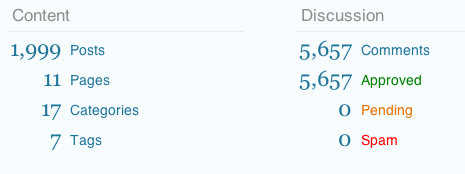
So why is this post called P2K? Because it’s number 2,000 [inspired by @cbmackay].

Thanks to everyone who has taken the time to comment and create another connection on my blog’s neural network!

Is leadership an emergent property?

Note: this post is in early Beta.

Is leadership an emergent property of people working together (social capital) or is it something delivered, in a top-down fashion by an individual? I was asked about this recently, and immediately thought about the Apache nation that had only situational leaders, Nantans, who were in charge as long as warriors were willing to follow them. Because of this decentralization, they were able to fight the Spanish for a long time, regrouping as necessary, ultimately destroyed by a “benevolent” United States.

Looking at my outboard brain (my blog) I’ve reviewed some thoughts on leadership, which has not really been my focus, but is perhaps more of an emergent property after almost eight years. These are some of the ideas that still resonate with me.

Let me begin with this quote from Peter Levesque, which I picked up in 2004, showing how digital  interconnectedness may change our view leadership:

I suggest that the leaders will be found among the aggressively intelligent citizenry, liberated from many tasks and obligations by technology freely shared; using data, information and knowledge acquired from open source databases, produced from the multiples of billions of dollars of public money invested through research councils, universities, social agencies, and public institutions.

But an aggressively intelligent citizenry needs access to its own ideas. This in an ongoing battle with the established powers. Open information and access to our common knowledge assets seems to be a required part of any new leadership model.

Leaders may be required in hierarchies but are they necessary in wirearchies? The great work of our time may be to design, build and test new organizational models that reflect our democratic values and can function in an interconnected world. Leadership today may be more of an architectural task, or one of setting up the right systems.

We’re now at the stage where we have some new ideas for work (wirearchynatural enterprisesworkplace democracy) and some new technologies (social, nano-bio-techno-cogno). The next step in this evolution is for a new organizational model and that conversation has already started. The ideology will come later.

Ideas lead technology. Technology leads organizations. Organizations lead institutions. Then ideology brings up the rear, lagging all the rest—that’s when things really get set in concrete.

Does ridiculously-easy group forming mean that leadership can now emerge when people get together for collective action? What kind of leadership is there in mass, decentralized, social movements, like the Arab Spring or Occupy Wall Street movements?

Warren Bennis wrote that hierarchy is a prosthesis for trust. With open systems, trust emerges.

Knowledge workers, collaborate, you have nothing to lose but your managers. This is a statement I made a bit in jest on Twitter, but the truth behind it is that management is less useful to the interconnected, professional, concept worker. With fewer managers and hyperlinks subverting hierarchy, will a different breed of leadership emerge?

It takes different leadership, or leadership for networks, to do the important work in complex work environments, which, in my opinion, is to increase collaboration and support social learning in the workplace.

I haven’t really answered my own question whether leadership is an emergent property of net work, but I have little doubt that we need different kinds of leadership (more open, transparent & diverse) and people with these attributes may emerge as their peers allow them to lead; for the time being.